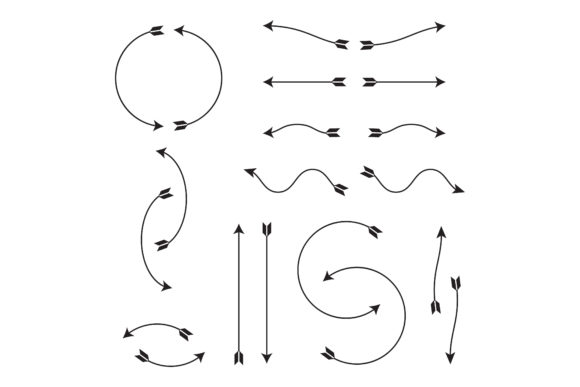
Hand Drawn Vector Arrows: A Versatile Tool for Visual Communication
Hand drawn vector arrows are more than just decorative elements—they are functional assets that can enhance clarity, direction, and visual storytelling in a wide range of creative and professional contexts. Whether you're designing infographics, crafting educational materials, or building brand assets, these isolated vector arrows offer a unique blend of artistic charm and technical precision.
Understanding Hand Drawn Vector Arrows
Hand drawn vector arrows are digital illustrations created using vector software such as Adobe Illustrator or Inkscape. Unlike raster images, which are made up of pixels, vector graphics use mathematical equations to define shapes, making them scalable without loss of quality. The "hand drawn" aspect refers to the stylized, organic feel of the design, often mimicking the look of handcrafted sketches rather than rigid, machine-generated lines.
This combination of scalability and artistic touch makes hand drawn vector arrows ideal for a variety of applications. They can be used as standalone graphics or integrated into larger compositions, offering flexibility in both form and function.
Where Hand Drawn Vector Arrows Fit in a Workflow
These arrows can be strategically placed at different stages of a project or workflow. Before a project begins, they can serve as visual cues to guide users through steps or highlight key components. During execution, they can help organize information, direct attention, or simplify complex processes. After completion, they can reinforce learning, summarize outcomes, or add a finishing touch to presentations.
For instance, in marketing, hand drawn vector arrows can be used in social media posts to illustrate product features or customer journeys. In education, they can support lesson plans by visually breaking down concepts or illustrating cause-and-effect relationships. For entrepreneurs, they can streamline pitch decks or business process diagrams, making abstract ideas more tangible.
Integration with Other Tools and Resources
The true power of hand drawn vector arrows lies in their ability to integrate seamlessly with other design tools and platforms. They can be imported into graphic design software like Canva, Figma, or Sketch, allowing for easy customization and placement within larger projects. When paired with icons, typography, or color schemes, they can enhance the overall aesthetic and functionality of a design.
Additionally, these arrows can complement data visualization tools such as Tableau or Power BI, where they can be used to annotate charts, highlight trends, or guide the viewer’s eye through a narrative. Their adaptability ensures they remain relevant across various industries and use cases.
Practical Implementation Tips
To make the most of hand drawn vector arrows, consider the following best practices:
- Use them purposefully: Every arrow should serve a clear function—whether it's pointing to an important detail, indicating direction, or reinforcing a concept.
- Ensure consistency: Maintain a uniform style across all arrows to preserve visual harmony, especially when working on multi-page documents or branding materials.
- Optimize for accessibility: Use high-contrast colors and ensure that arrows are easily distinguishable from surrounding content, particularly for digital formats.
- Test scalability: Verify that arrows maintain their quality when resized, especially if they will be used across different screen sizes or print resolutions.
- Organize your assets: Keep a well-structured library of arrows so they are readily available for future projects, saving time and effort in the long run.
Workflow Examples
Imagine a scenario where a small business owner is creating a training manual for new employees. By incorporating hand drawn vector arrows, they can visually guide readers through each step of a process, ensuring clarity and reducing confusion. Similarly, a blogger might use these arrows in an infographic to explain a complex topic in a digestible format.
In a design agency setting, hand drawn vector arrows can be part of a reusable asset library, streamlining the creation of client presentations and marketing materials. These examples illustrate how the arrows can be woven into existing workflows, enhancing both efficiency and effectiveness.
Considerations for Long-Term Use
When planning for long-term use, it's essential to think about factors such as compatibility, usability, and quality control. Ensure that the vector files are properly formatted and tagged so they can be easily accessed and modified over time. Additionally, consider the potential need for updates or revisions, especially if the arrows are part of a dynamic project or evolving brand identity.
Regularly reviewing and refining your collection of arrows can help maintain relevance and ensure that they continue to meet the needs of your audience and workflow. This proactive approach supports sustainable design practices and reduces the risk of outdated or ineffective visuals.
Conclusion
Hand drawn vector arrows are a valuable addition to any designer's toolkit. Their blend of creativity and functionality makes them suitable for a wide range of applications, from educational materials to business presentations. By understanding how to integrate them into your workflow, you can enhance clarity, improve communication, and elevate the overall impact of your visual content.